Twin Genes

Twins are thought to have one soul in Yoruba culture.

Twin genes run strong in Nigeria. It’s a fact. A Nigerian artist in the audience asked identical twin brother artists Jerry and Terry Lynn a question about the Yoruba twin tradition. During their recent solo show and art talk at Harlem’s Schomburg Center, one of the twins said that his DNA test results traced their ancestry to Nigeria—sometimes called “land of twins.” I wonder if there could be a connection.
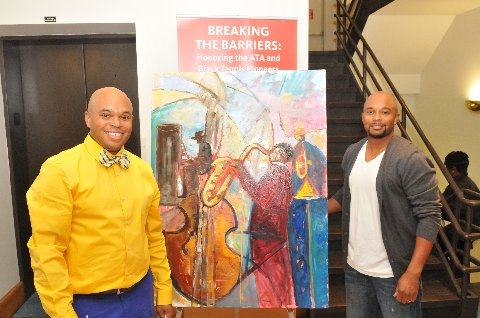
Twin brother artists Jerry and Terry Lynn at Harlem show.

Apparently, Nigeria has the highest rate of twins in the world. They believe that twins are a sign of good luck and special blessings. Twins are depicted in ancient artifacts as deities and associated with many ceremonies. Twins are also thought to have one soul in the Yoruba culture.
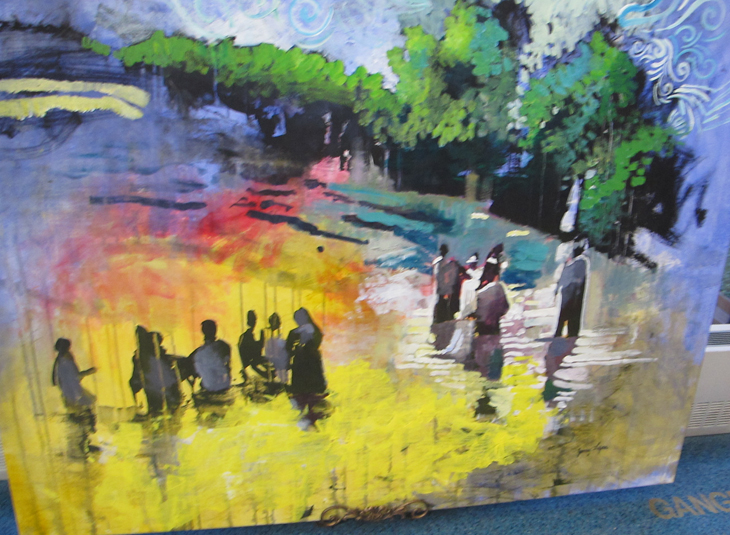
Artwork from twin brother's show.
Artwork from twin brother’s show.

The Lynn twin artists are known for creating art while simultaneously painting on the same canvas. See my review of their show published recently in examiner.com (www.examiner.com/article/twin-brother-artists-at-harlem-s-schomburg, New York). What better evidence of ‘one soul’ could you find than that? Could all that we know about twins be a coincidence, as some experts assert?
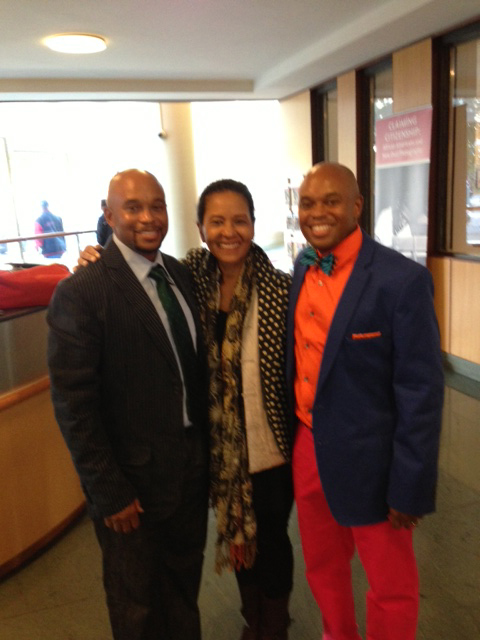
with twin artists @Schomburg.

The rate of identical twins is considered steady throughout the world at approximately 0.5 percent of all births, by Belgian researcher Fernand Leroy, a noted twin expert.(www.google.com/hostednews/afp/article/ALeqM5i_IsZNBK7Hf1B4VhfWtFxg7G2svw)

“Overall, almost 5 percent of all Yoruba births produce twins compared with just around 1.2 percent for Western Europe and 0.8 percent for Japan — although fertility drugs in the developed world are changing those figures,” cited the Belgium report. Nigeria’s traditional yam diet is one way to explain their preponderance for twins. Yams contain a natural hormone phytoestrogen, which stimulate the ovaries to produce an egg from each side.

Is there a twin gene? Do twins run in families? The answers to these questions are: Yes, Yes and No. Yes. There is a twin gene for “hyper-ovulation” only on the mother’s side for fraternal twins. Yes. Fraternal twins “run in families” on the mother’s side only, if she inherits the gene for hyper ovulation. No. There is no identical twin gene.(http://multiples.about.com/od/pregnancy/a/familytwin.htm)

Do twins skip a generation? No. This is another myth. “There is absolutely no evidence, other than circumstantial, that twins are more likely to occur every other generation. However, if you consider the influence of genetic hyper ovulation, this pattern could appear in families depending on whether their children were sons or daughters.”

Family history of twins is only one of several factors leading to twins. Maternal age, race, weight, diet, and taking fertility drugs, all contribute to twinning and may have a stronger influence than family history. Do you have twins in your family?

Buried Treasures Wrap-up

original newspaper
Anthony Cochran shows his original Harper’s Weekly Magazine at Brooklyn Museum event.

Buried treasures abound in Brooklyn. Anthony Cochran brought in an 1863 original edition of Harper’s Weekly Magazine that he inherited from his maternal uncle. Anthony, an author and family historian, was among dozens of participants at the Smithsonian Museum’s “Save Our African American Treasures” event held recently at the Brooklyn Museum. The examiner quickly opened his bound volume to the cover page of July 4th, 1863, to exam the stories and images. “Harper’s was the most famous of the news media during the Civil War. This page is a favorite among Civil War collectors. They would cut out the images, delete the text, and make post cards to sell,” said the examiner.


treasured photos, old papers are collector's items
Old treasured photos are collector’s items.

Anthony gave the ‘buried treasures’ event high marks: “The Smithsonian Museum did a great deed by proactively looking for our history and teaching about preservation. The representative who evaluated my publication was knowledgeable and also genuinely passionate about the work she was doing. I found all the staff members extremely warm, sincere and enthusiastic.”

The Fourth of July edition of Anthony’s Harper’s newspaper featured a story entitled: “A Typical Negro.” We all have seen the image, but not the story of this courageous formerly enslaved man called “Gordon.” His back is scared, blistered, and exposed. The museum examiner explained that Gordon was actually enlisting for military duty at a Baton Rouge Union post after escaping twice from a brutal Mississippi slave plantation and serving as a Unionist guide. His bravery is described in the published Harper’s account. She said the vivid images told several American stories: of slavery, the Civil War and about media – especially graphics, photography and print media. She explained that newspaper images were actual woodcut drawings created by a skilled artist. Photographs could not be printed in newspapers yet. The army officers were so outraged by Gordon’s injuries that they documented three images of him: ragged and barefoot when he entered their lines; at the military medical exam; and in full uniform as a soldier in the Union forces. Anthony’s rare newspaper editions were measured and preserved in a custom-made box. He said he would pass it down to a family member rather than donate or sell his treasure.

Brooklyn Museum’s lobby bustled with over twenty-five Smithsonian Museum professionals standing by to examine items at numerous examination tables. “Buried Treasure” participants brought in all kinds of items: an ancient wedding dress, Bibles, photographs, books, artwork, quilts and more.

Valerie Faulk, a caretaker for a forgotten Tuskegee Airman, brought in his aviator’s goggles, medals, certificates and military cap. She said that she had cared for the unsung hero for over five years until he recently died. She said when she heard about the museum’s event. She was excited. The Airman’s family told her to discard his things. But she could not part with them. The staff showed tender loving care as they listened and examined her treasures. She had everything wrapped in plastic. A team properly re-wrapped the items in acid-free paper and placed them in custom-made boxes. She expressed gratitude. But said she wanted to gift the items to the museum for posterity. Regretfully, they could not accept her offer.

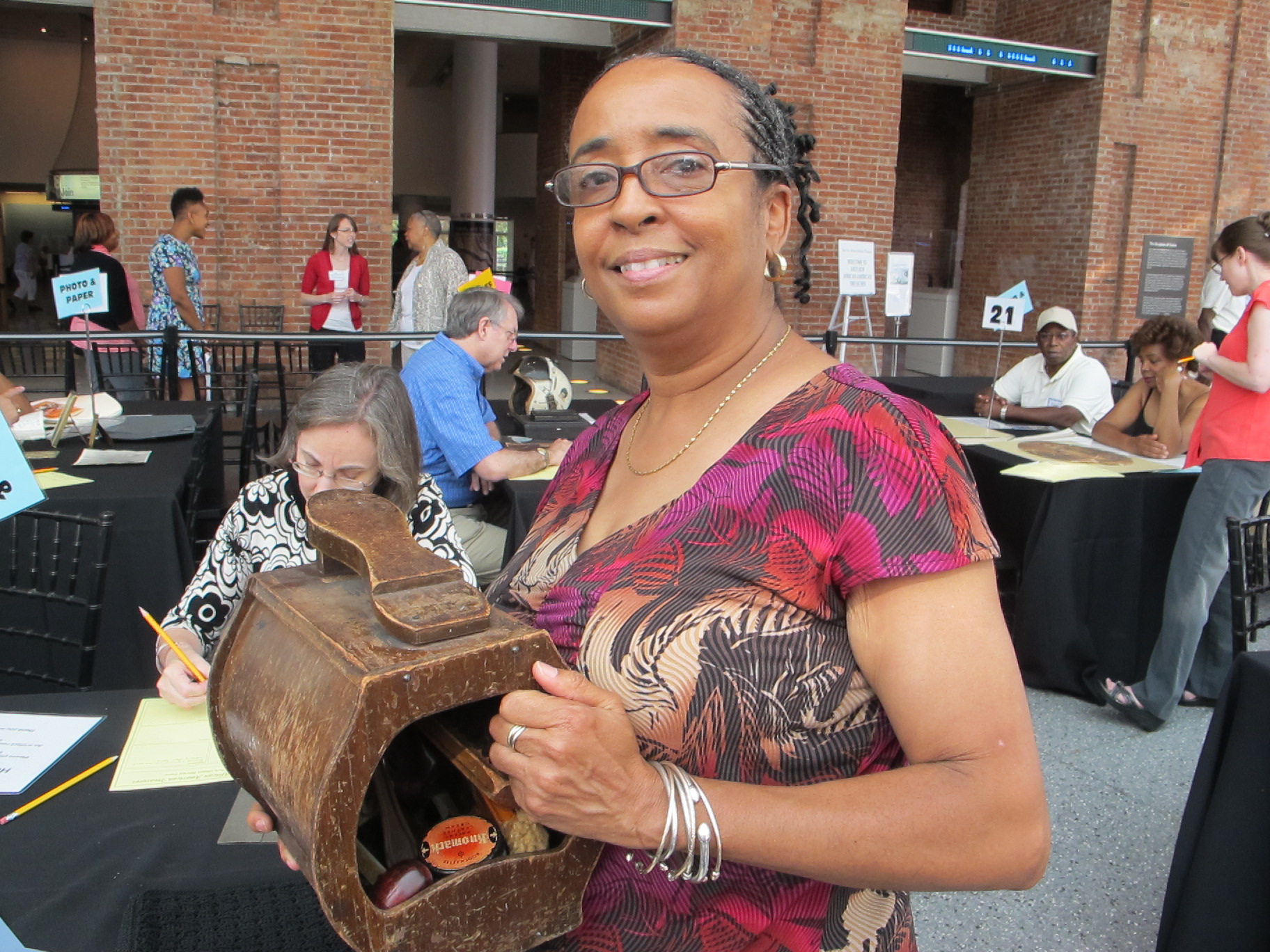
Holding her father's old shoeshine box
Holding her father’s old shoeshine box.


Jean-Marie Bain from Grenada, West Indies, brought in her father’s shoeshine box, his banjo and an exquisite photograph of him. The photo was autographed by the famous Harlem photographer James Van Der Zee. Her items told a story of Caribbean immigration, the Harlem Renaissance, and segregation. Her dad shined shoes and entertained passerby’s during in the 1930s. She said dad worked at Ocean Crest Hotel lobby in Long Beach. From his meager earnings, he was able to purchase a Brooklyn brownstone where she still lives today.


Peace advocates show old folks music books

Sharleen Leahey, a peace advocate and folksinger brought in “Red Dust and Broadsides,” a songbook by Broadside magazine publisher, Sis Cunningham; a topical folk music songbook published in the early 1950s called “The Peoples Songbook” and a back issue of the topical folk music magazine “Broadside” published in 1964. The items provided an overview of American folklorists, the peace movement and authentic Black music. Lyrics and transcriptions of “Negro Slave” songs were published in the Cunningham book.

“The Smithsonian appraiser seemed quite knowledgeable about preserving old books and magazines and had a special interest in music publishing. We discussed some of the songs and issues discussed in my publications. In addition, we exchanged our knowledge of the legendary folklorists John and Alan Lomax who collected hundreds of American folk songs for the Smithsonian Folklife Center in the early and mid-20th Century,” said Leahy.

Photo: Jean-Marie Bain holds her father’s shoe shine box at Brooklyn’ Museum’s “Buried Treasures” event sponsored by the Smithsonian Museum. Smithsonian Institute’s National Museum of African American History and Culture will bring “Buried Treasures” to more locations. For more information go to: nmaahc.si.edu.


Brooklyn’s “Buried Treasures” Wrap-up

Jean-Marie Bain holds her father’s shoe shine box at Brooklyn’ Museum’s “Buried Treasures” event sponsored by the Smithsonian Museum.

Anthony Cochran brought in an 1863 original edition of Harper’s Weekly Magazine that he inherited from his maternal uncle. Anthony, an author and family historian, was among dozens of participants at the Smithsonian Museum’s “Save Our African American Treasures” event held recently at the Brooklyn Museum. The examiner quickly opened his bound volume to the cover page of July 4th, 1863, to exam the stories and images. “Harper’s was the most famous of the news media during the Civil War. This page is a favorite among Civil War collectors. They would cut out the images, delete the text, and make post cards to sell,” said the examiner.

Anthony gave the event high marks: The Smithsonian Museum did a great deed by proactively looking for our history and teaching about preservation. The representative who evaluated my publication was knowledgeable and also genuinely passionate about the work she was doing. I found all the staff members extremely warm, sincere and enthusiastic.”

Anthony Cochran presents his original edition of 1863 Harper’s Weekly Magazine at Brooklyn Museum’s “Buried Treasures” event.

The Fourth of July edition of Anthony’s Harper’s newspaper featured a story entitled: “A Typical Negro.” We all have seen the image but not the story of this courageous formerly enslaved man called  “Gordon.”  His back is scared, blistered, and exposed. The museum examiner explained that Gordon was actually enlisting for military duty at a Baton Rouge Union post after escaping twice from a brutal Mississippi slave plantation and serving as a Unionist guide. His bravery is described in the published Harper’s account. She said the vivid images told several American stories: of slavery, the Civil War and about media – especially graphics, photography and print media. She explained that newspaper images were actual woodcut drawings created by a skilled artist. Photographs could not be printed in newspapers yet. The army officers were so outraged by Gordon’s injuries that they documented three images of him: ragged and barefoot when he entered their lines; at the military medical exam; and in full uniform as a soldier in the Union forces.  Anthony’s rare newspaper editions were measured and preserved in a custom-made box. He said he would pass it down to a family member rather than donate or sell his treasure.

Brooklyn Museum’s lobby bustled with over twenty-five Smithsonian Museum professionals standing by to examine items at numerous examination tables. “Buried Treasure” participants brought in all kinds of items: an ancient wedding dress, Bibles, photographs, books, artwork, quilts and more.

Gordon, a courageous, formerly enslaved man, enlists for Union Army, as featured on cover of Harper’s Weekly Magazine, July 4, 1863.


Valerie Faulk, a caretaker for a forgotten Tuskegee Airman, brought in his aviator’s goggles, medals, certificates and military cap. She said that she had cared for the unsung hero for over five years until he recently died. She said when she heard about the museum’s event, she was excited. The Airman’s family told her to discard his things. But she could not part with them. The staff showed tender loving care as they listened and examined her treasures. She had everything wrapped in plastic. A team properly re-wrapped the items in acid-free paper and placed them in custom-made boxes.  She expressed gratitude. But said she wanted to gift the items to the museum for posterity. Regretfully, they could not accept her offer.

Valerie Falk with Tuskegee Airman’s items at Brooklyn Museum’s “Buried Treasures” event.

Jean-Marie Bain from Grenada, West Indies, brought in her father’s shoeshine box, his banjo and an exquisite photograph of him. The photo was autographed by the famous Harlem photographer James Van Der Zee. Her items told a story of Caribbean immigration, the Harlem Renaissance, and segregation. Her dad shined shoes and entertained passerby’s during in the 1930s. She said dad worked at Ocean Crest Hotel lobby in Long Beach. From his meager earnings, he was able to purchase a Brooklyn brownstone where she still lives today.

Sharleen Leahey, a peace advocate and folksinger brought in “Red Dust and Broadsides,” a songbook by Broadside magazine publisher, Sis Cunningham; a topical folk music songbook published in the early 1950s called “The Peoples Songbook” and a back issue of the topical folk music magazine “Broadside” published in 1964. The items provided an overview of American folklorists, the peace movement and authentic Black music. Lyrics and transcriptions of  “Negro Slave” songs were published in the Cunningham book.
“The Smithsonian appraiser seemed quite knowledgeable about preserving old books and magazines and had a special interest in music publishing. We discussed some of the songs and issues discussed in my publications. In addition, we exchanged our knowledge of the legendary folklorists John and Alan Lomax who collected hundreds of American folk songs for the Smithsonian Folklife Center in the early and mid-20th Century,” said Leahy.

Sharleen Leahey (l) with friend Audrey O’Connell (r) presented their folk music books at Smithsonian Museum’s “Buried Treasures” event at Brooklyn Museum.

Smithsonian Institute’s National Museum of African American History and Culture will bring “Buried Treasures” to more locations. For more information go to: nmaahc.si.edu.


Off-Broadway Harlem show

I attended Opening night recently of Buried Child, a Sam Shepard Revival at Aaron Davis Hall at City College in Harlem. Here’s an excerpt, with additional photos not included in my review, as published on Examiner.com:

BURIED CHILD — Khalil Kain directing “Buried Child” by Sam Shepard at Aaron Davis Hall, which  presented the play in an Off-Broadway production July 11 to August 3. Photo by Jingxi Zhang.

Actor Khalil Kain, known for character roles in films and as Darnell Wilkes on the TV series Girlfriends, made his directing debut recently with an Equity LORT/LOA production of Sam Shepard’s Buried Child.  The show runs through August 3, Aaron Davis Hall, at Harlem’s City College campus.

A racially mixed cast interpreted Shepard’s 1979 Pulitzer prize-winning play about a once prosperous but now dysfunctional Midwestern farm family. The play’s deep, dark secrets reveal incest, murder and multiple personality disorders. When grandson Vince makes a surprise visit with his girlfriend, Shelly, their presence sets off a series of revelations. A haunted house springs to life with Shelly, Vince and his grandpa, Dodge, who does not recognize him. You wonder what’s going to happen next. The ending may knock your socks off!

The cast included: Robert Boardman, as Dodge; Teresa Anne Volgenau, as Halie; Eric Gravez, as Tilden; Stephen Macari, as Bradley; Teniece Divya Johnson, as Shelly; Leroy Smith Graham, as Vince, and Edwin Matos, Jr., as Father Dewis. Set design is by Arnold Bueso. Lighting design is by Brian Aldous. Costume design is by Mary Myers. The production also included: Stage Manager, Reginald L. Wilson; Assistant Stage Manager, Stephanie Peralta; Assistant to the Director, Brandon Baskin; Hair & Makeup, Brandalyn Fulton; and Production Assistant, Michael Aponte; Khalil Kain, director.

Tickets are $25 general admission; $10 seniors and students (with ID). Performances run through August 3 on the following schedule: 7 p.m. Thursdays and Fridays, 2 p.m. and 7 p.m. Saturdays. Call the box office (212) 650-6900. For online tickets go to: www.adhatccny.org. Aaron Davis Hall is located at 135th Street and Convent Avenue, on the City College of New York campus. Subways are #1 to 137th Street; C to 135th Street, or A or D to 145th Street. Free parking is available in the South Campus Parking Lot (enter at 133rd Street and Convent Ave).

BURIED CHILD — Aaron Davis Hall will present an Off-Broadway production of “Buried Child” by Sam Shepard, directed by Khalil Kain, July 11 to August 3, 2013. (L) Robert Boardman as Dodge, (R) Eric Gravez as Tilden. Photo by Jonathan Slaff


Cast of Buried Child have fun pose at post-Opening Night Reception.

Genealogy is Good for Your Brain

Genealogy is good for your brain! I stumbled across a study done in Berlin that seems to prove that genealogy increases brainpower. Thinking about our ancestors can boost performance on intelligence tests creating something called an “ancestor effect,” according to the European study.

Maternal grandmother’s sister Aunt Emily and Uncle Mansing pose in Trinidad.

“Anecdotally, there’s reason to believe that such thoughts (thinking about where we came from – our ancestors) are beneficial. Why else the public fascination with genealogy and programmes like the BBC’s Who Do You Think You Are? Now Peter Fischer and his colleagues at the Universities of Graz, Berlin and Munich have shown that thinking about our ancestors boosts our performance on intelligence tests – what they’ve dubbed ‘the ancestor effect’.”

Read more about it in the British Psychological Society’s Research Digest Blog at: http://bps-research-digest.blogspot.com/2010/12/benefits-of-thinking-about-your.html.

What happy good news! I have always felt that the genealogists were smarter than most people. So, here’s some scientific proof to back up that claim.  I mean, what profession requires one to be an historian detective organizing, analyzing, and interpreting data and using the brain in so many different ways? Genealogy is a multidisciplinary pursuit that demands insights into many areas including history, psychology, sociology, biology, genetics, geography, languages, problem solving, logic and mathematics.

Do you think about your family history? Have you tried to do genealogy searches for anyone? Great. Your are brilliant!